
What happened next: the man who saved the last phone box in his village
When BT earmarked the kiosk for closure in January, Derek Harris began to campaign. The fight gave him purpose at a difficult time in his life
- ‘I don’t want it to die’: one man’s battle to save the last phone box in his village
Emine Saner, The Guardian
Tue 30 Dec 2025 05.00 GMT
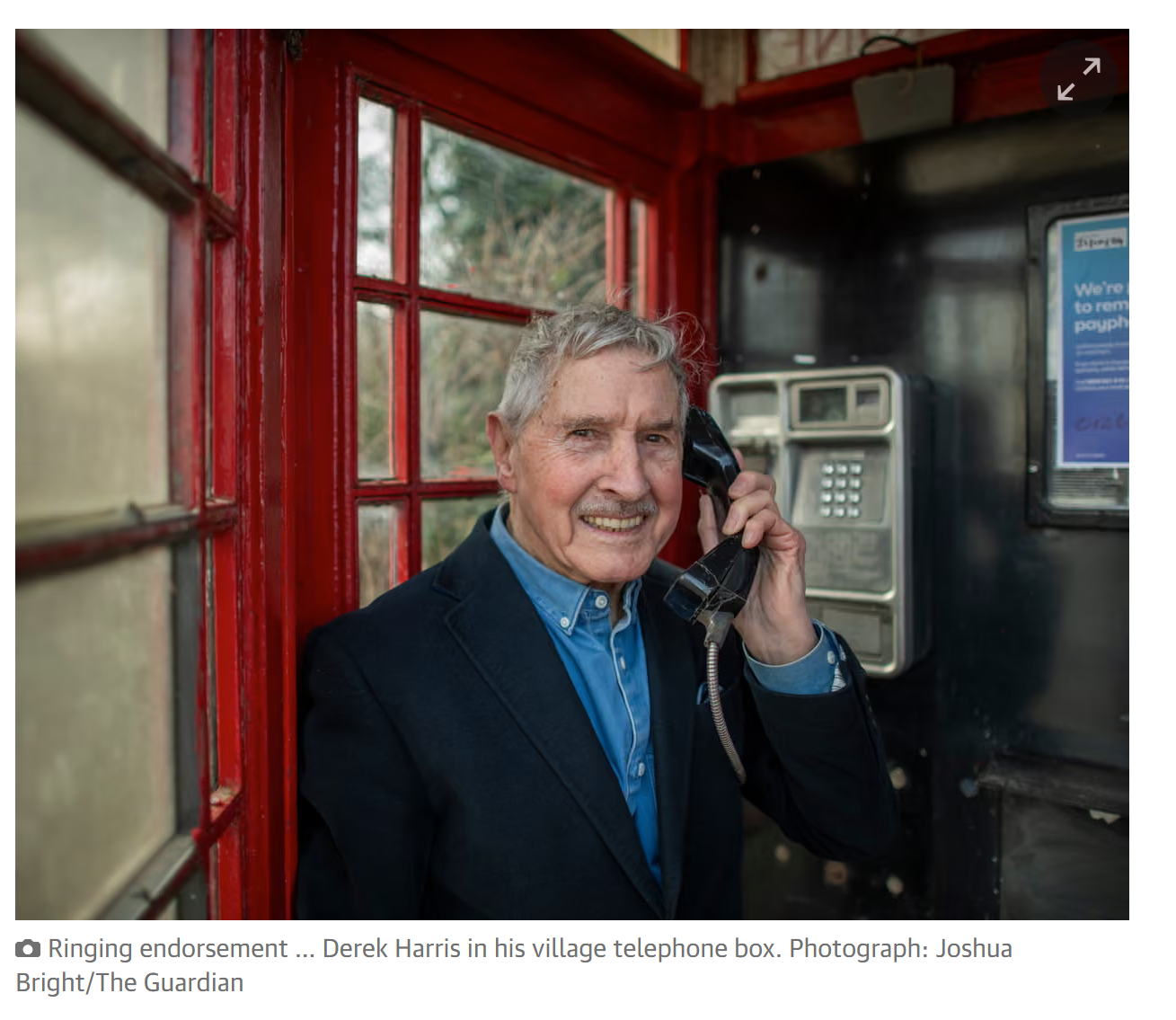
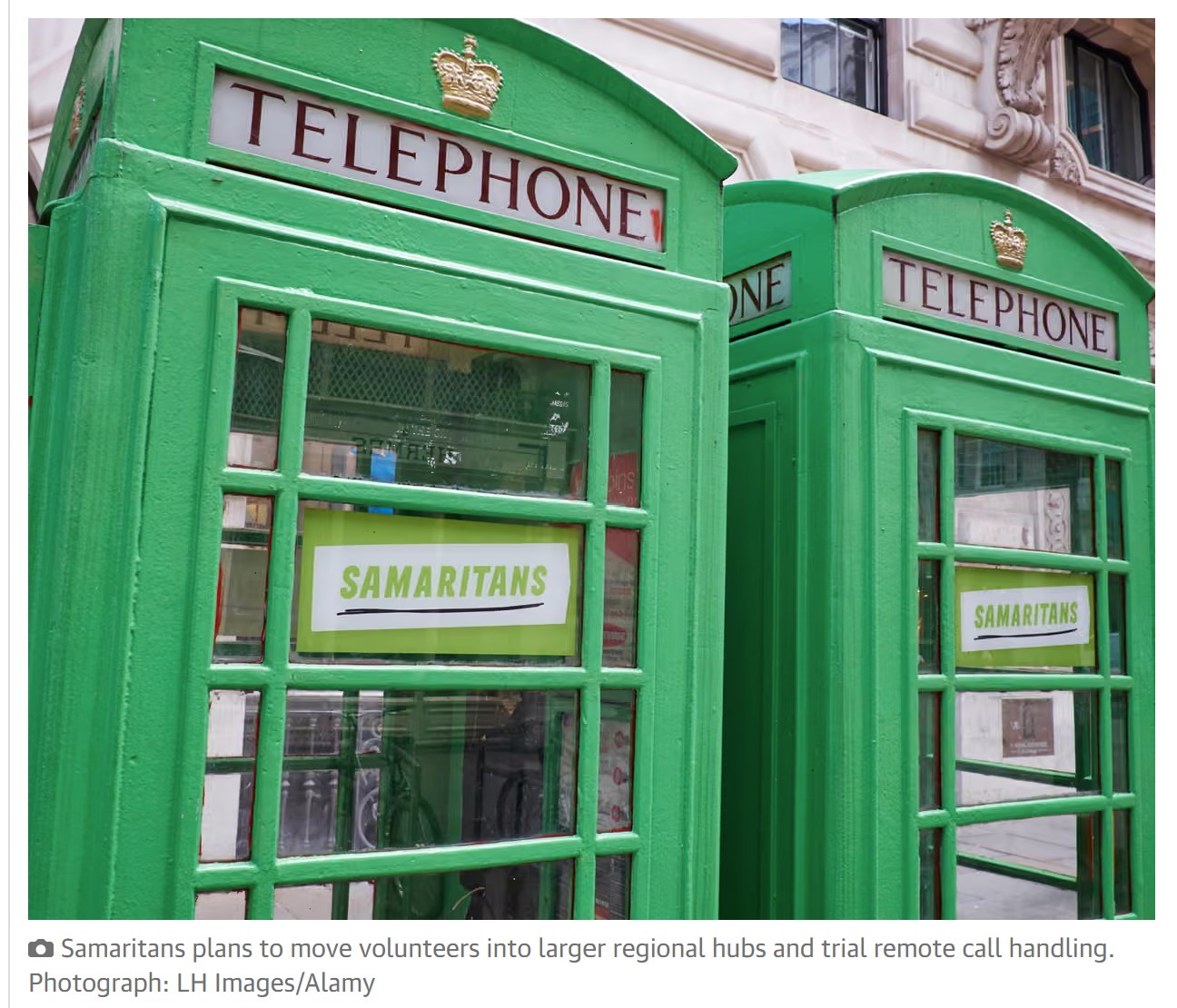
The caller display flashes up: “Derek in the K6” it reads. On the line is Derek Harris, ringing from the red phone box he saved for his village. When he saw, on the agenda for the parish council meeting, that BT had earmarked it for closure, Harris knew he had to fight it. “It’s fighting for what is valuable, cherished,” he told me when I went to meet him in February, sitting over coffee in a cafe near Sharrington, the Norfolk village that has been his home for more than 50 years, and the phone box for longer. It’s a K6, for Kiosk No 6, designed in 1935 by Sir Giles Gilbert Scott.
For a few weeks, Harris, then 89, became a media star. One of the criteria for keeping a phone box in use is that at least 52 calls have to be made from it in a year (fewer than 10 had been made in 2024). As the campaign picked up speed, one day a queue of people made more than 230 calls from the K6. Harris sparked a national conversation about the continuing need for kiosks in an age of mobiles. Behind the scenes, he was a tenacious activist, sending constant emails to his MP, councillors, and of course, BT. Some of them included photographs he had taken of BT vans whose engineers were working nearby, as proof the phone box could be easily maintained. In March, BT decided to reverse its decision.
Quite a lot of people are getting fed up with being oppressed by big organisations
Harris stresses it was a community effort. “We had the massive turnout” of volunteers to make the calls, he says. And “not just from this village, but from surrounding villages. It would have been impossible to have pulled this thing off had not so many people – local MP, district councillors, everyone – taken up the call to action.” It got national and even global coverage, he thinks, because “it struck a chord. Quite a lot of people are getting fed up with being oppressed by big organisations.”
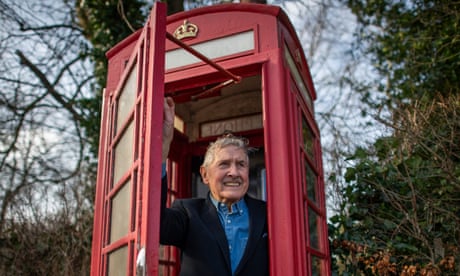
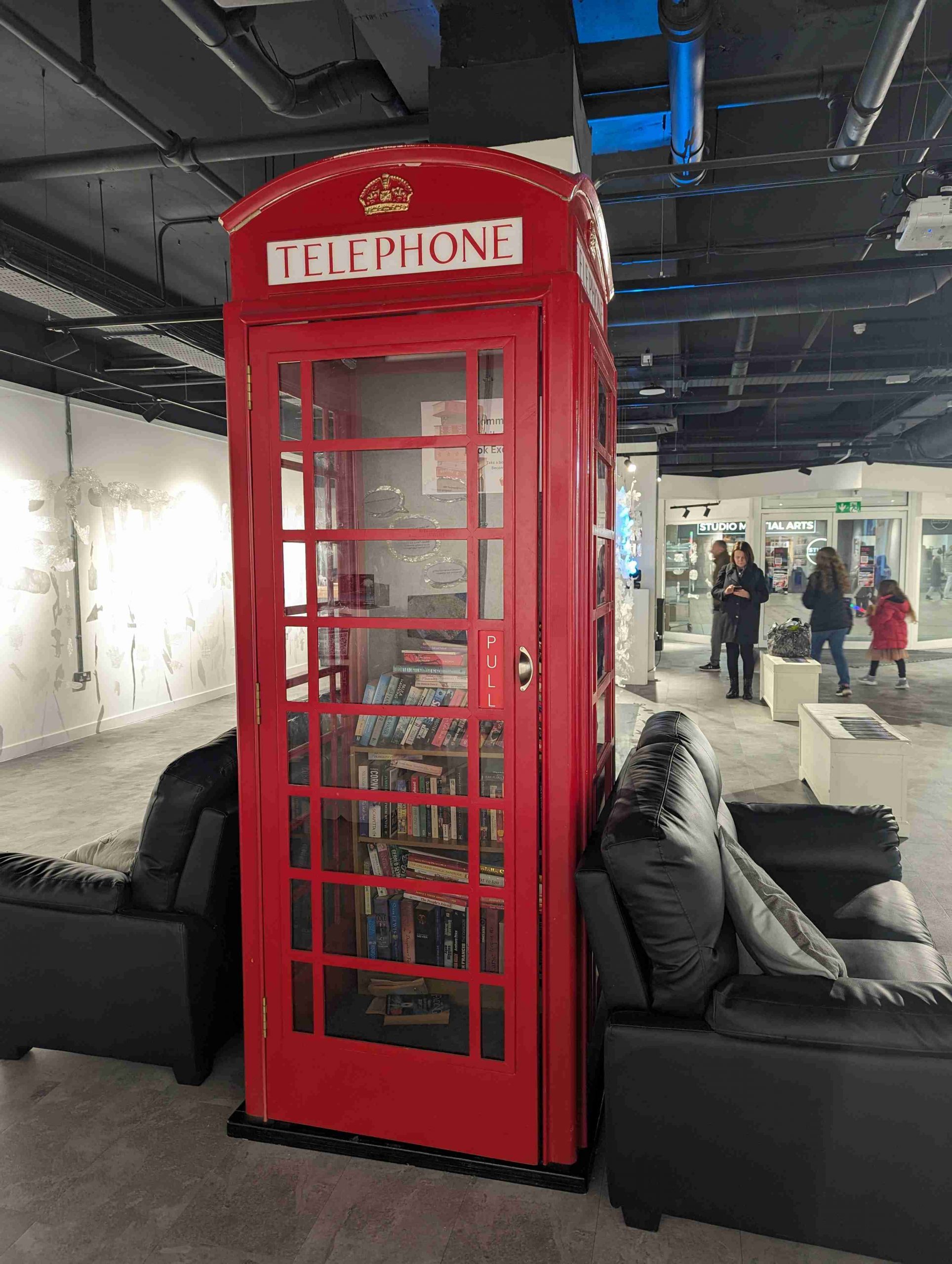
In February, when I met Harris, I was struck by how he seemed to view the phone box as a living being, with such affection for it. If it had been turned into a library, as other red phone boxes have, it would cease to be. As a functional kiosk, he said, “it would be alive”. I was thinking about this, driving home later that day, when I pulled into a car park for a rest and checked my phone. Harris had emailed me, titled “strictest confidence”, and I read with dismay that he had recently been diagnosed with inoperable cancer. “It struck me that this K6,” he wrote, “designed in the year of my birth, is deserving of being saved from a death sentence.”
I asked if I could mention his illness, but he said absolutely not (though he’s consented to me publishing now), that he didn’t want a fuss and certainly didn’t want anyone to think he was using it as a ploy to get sympathy for the campaign. The phone box had value in its own right. The campaign gave Harris a sense of purpose at a time when he was coming to terms with bad news. “It’s been a good achievement,” he says now. “There’s life in the old boy yet.” What does the retained phone box mean to the village? “Oh they’re overjoyed,” he says.
Since his victory, Harris has called me a few times over the year, stopping at the telephone kiosk while out on his walk, to say hello, complain about a politician, tell a story or two. It doesn’t hurt to keep the call numbers up. “We had a bit of snow earlier,” he says today, “but I walked here.” What can he see? “There’s open fields, lovely panorama. I’m looking through clear glass.”
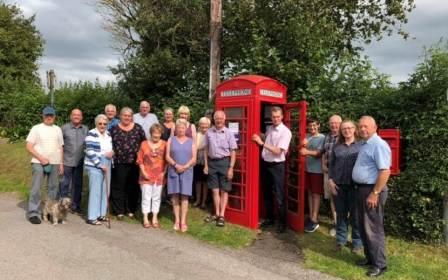
Not only was the phone box saved, but BT refurbished it in the summer, including a new door and brass hinges. “It looks splendid.” It was done, he jokes, “just in time for my birthday”. Harris turned 90 in July, and was celebrated by his village with a garden party. His card from the parish council featured a picture of his beloved red phone box, and he was given a phone box fridge magnet.
Responses
Responses to the article from the Guardian are reposted below – https://www.theguardian.com/culture/2022/may/01/the-uks-dwindling-red-phone-boxes-call-up-some-wonderful-memories
In response to Sophie Elmhirst’s long read, Steve Townsley and Mike Abbott recall their days with BT, and Tony Vinicombe, Mark Newbury and Peter Avery extol the virtues of Giles Gilbert Scott’s kiosks:
I greatly enjoyed Sophie Elmhirst’s article on the last of the UK’s phone boxes (The long read, 28 April). In the late 1980s, I worked for British Telecom in east London and when a new boss of “public call offices” (as phone boxes were officially called) was appointed, I was asked to take him on a tour of some of his new property. I took him to the site of one that I knew was frequently vandalised. All that remained were a few metal stubs poking out of the ground. It at least gave the new guy a feel for the scale of his job. From what I remember, he didn’t last long.
Steve Townsley
Bridgend
Your article was a joyous trip down memory lane. In the mid-1980s, I was the press officer for the international division of British Telecom. Due to a lack of interest from the corporate centre, I found myself managing the 30 or so BT district press officers dotted around the UK on matters of red phone boxes. As part of that, in tandem with my BT colleague Dave Wenlock, I toured schools, Dave suitably dressed in his “Mr Payphone” costume, imparting to young children the importance to the community of a working, reliable payphone network, key in those pre-mobile phone days. Wonderful memories.
Mike Abbott
Chiswick, London
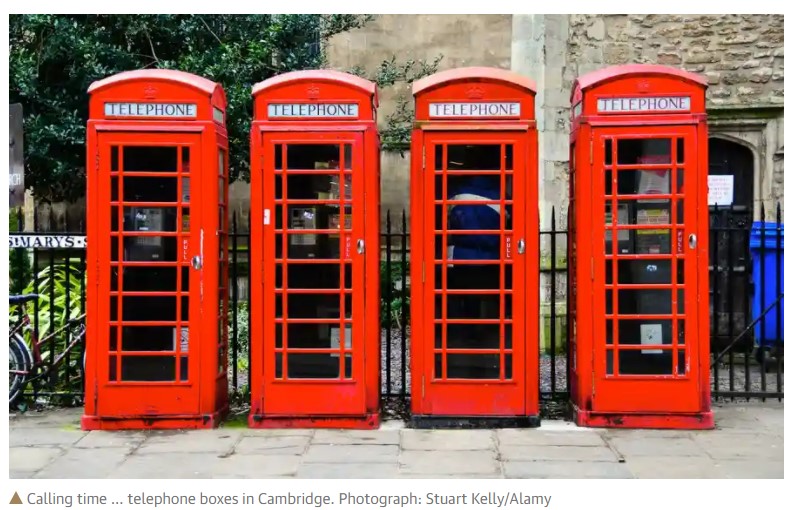
Towns that still possess a telephone kiosk designed by Giles Gilbert Scott might like to recognise its value by making it a listed building. Here in Shoreham-by-Sea, we have one that’s Grade II-listed. The 1920s Homes for Heroes Sea Mills estate in Bristol has one that contains its museum. These very British structures need to be retained, if only for their visual importance.
Tony Vinicombe
Shoreham, West Sussex
We still have a (working) red telephone box in Low Mill, Farndale. Given that you cannot get a mobile phone signal here, one of these days it will come in useful. In the meantime, its main role will remain acting as a focal point for every photographer passing through (red phone box, 19th-century stone bridge and a chapel – the epitome of the North York Moors).
Mark Newbury
Farndale, North Yorkshire
Save the Gilbert Scott cubicles, but remove all the disgusting 1990s BT boxes from our pavements: every time one is removed, a tree is planted in that hole. Simple.
Peter Avery
London
Comments Off on Responses
Posted in Comment, Geography
Tagged community, UK