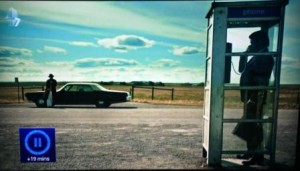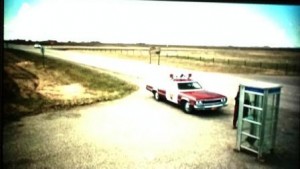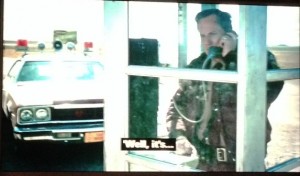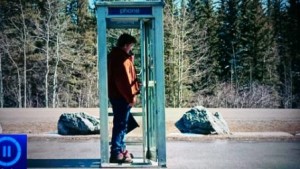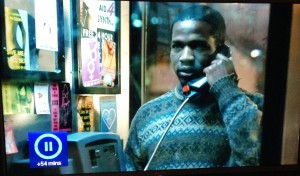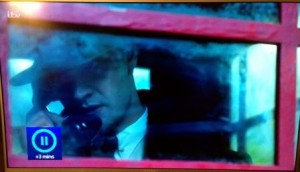
The second Fargo TV series (wonderful) showed us a few phone shots and one box in particular got a lot of use:


The second Fargo TV series (wonderful) showed us a few phone shots and one box in particular got a lot of use:


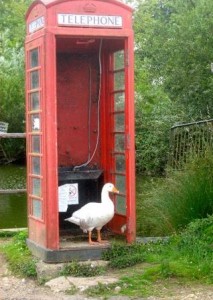
There has recently been much flooding across areas of the UK. Here is a photo relevant to this blog:

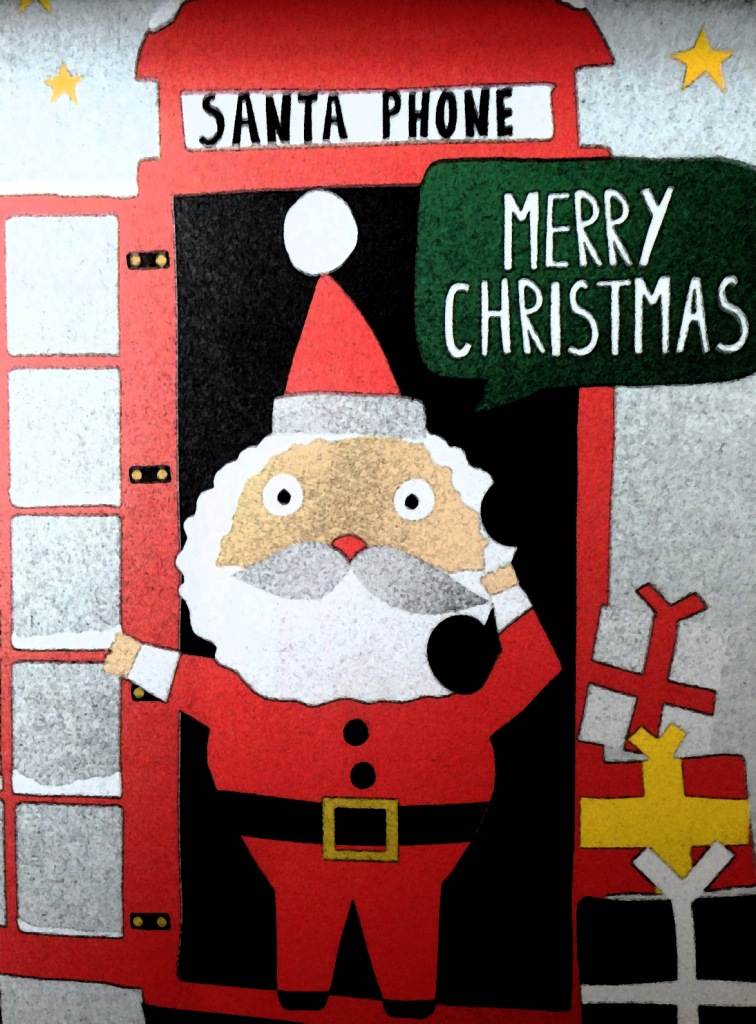
I don’t actually know this programme but couldn’t ignore the ad, for obvious reasons;

This shot is from the penultimate episode of ‘Humans‘:

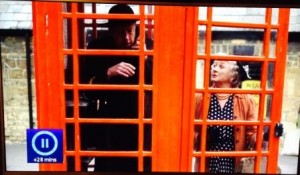
From the recent adaptation of Jekyl and Hyde:

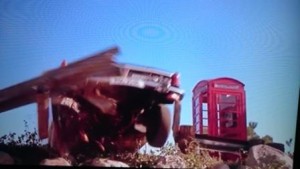
The iconic red box even turns up on a US highway in ‘Austin Powers: the spy who shagged me’.

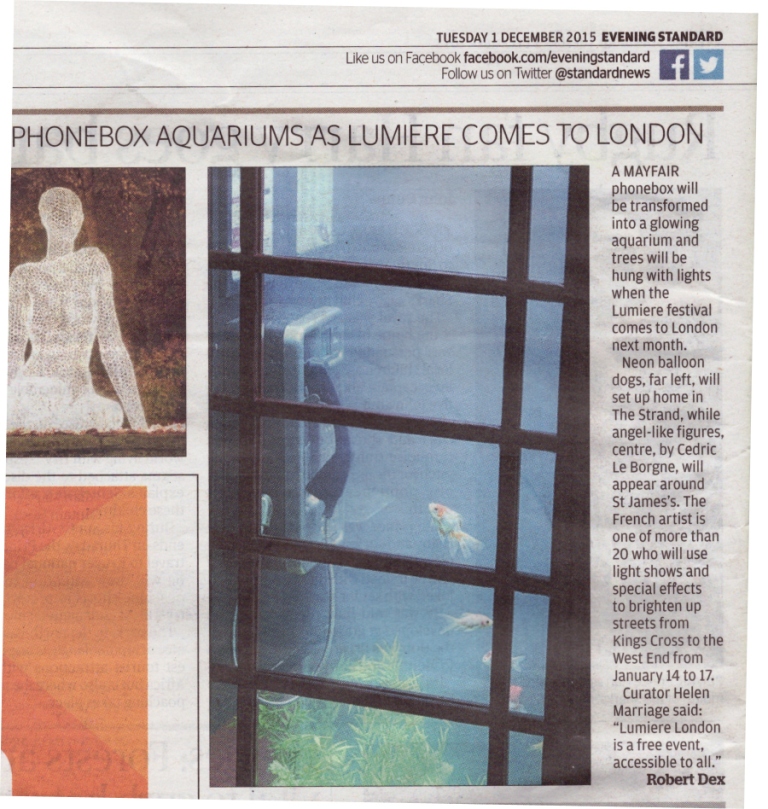
A Mayfair phone box will be transformed into a glowing aquarium and trees will be hung with lights when the Lumiere festival come to Lndon next month. Neon balloon dogs will set up home in the Strand, while angel-like figures, by Cedric Le Borgne, will appear around St James. The French artist is one of more than 20 who will use light shows and special effects to brighten up streets from Kings Cross to the West End from January 14 to 17. Curator Helen Marriage said:
“Lumiere London is a free event, accessible to all.”
This isn’t new to this blog, as such, but good to see the phone box still warrants news articles. Here reproduced from yesterday’s ‘Guardian’…

When Eliza Soane died 200 years ago, it changed the life of her architect husband Sir John Soane – and it changed the British streetscape through the strange afterlife of the tomb he designed for her, which inspired the design of the iconic red telephone box.
Soane never got over his wife’s death on 22 November 1815 although he lived until 1837. He was one of the most renowned architects of his day – creator of monumental public buildings including the Bank of England, churches, and country houses, as well as an avid collector of fragments of older buildings including Old St Paul’s cathedral. He blamed her death on the shock of discovering that their son George was the author of some malevolent anonymous reviews of his work.
Her tomb, which became the family vault, was raised over her grave in Old St Pancras churchyard in 1816, and inspired the Giles Gilbert Scott telephone kiosk. Scott knew the tomb well as a trustee of the Sir John Soane’s Museum for 35 years, and his 1920s creation is now an endlessly imitated landmark in British design.
Staff of the museum in Lincoln’s Inn Fields in London, the family’s home and his workshop, have commissioned a specially designed wreath to lay on her grave in Old St Pancras churchyard.
Helen Dorey, acting museum director, said: “I regard this primarily as a private pilgrimage which we are doing because it is the right thing to do to honour our founder and his family.”
The ceremony was organised for 23 November, which dawned sunny and frosty in the first cold snap of winter.
“The last time we laid a wreath on the Soane tomb was in January 1987 to mark the 150th anniversary of Soane’s death – there was snow on the ground,” Dorey recalled.
The Soane family home – with features including a shadowy cell for an imaginary monk, a gigantic Egyptian sarcophagus and a towering monument to their pet dog, but also Eliza’s cosy dining room and parlour – has been open as a museum since her husband’s day. It is still full of memories of Eliza, who was a passionate art collector and added paintings by JMW Turner and William Hogarth, which are still among the gems of the collection.
She was buried on 1 December 1815, and Soane recorded in his diary: “Melancholy day indeed! The burial of all that is dear to me in this world and all I wished to live for.”
Soane never forgave his son for Eliza’s death. He framed the fatal reviews in black, and hung them on the wall, headed “Death Blows given by George Soane.”
There are several images of the tomb in the current exhibition at the museum, Death and Memory, including a wildly romantic view by George Basevi, which shows it as a gigantic structure set in a forested gorge, not a crowded London churchyard.

Another guy that takes photos of urinals…