In Hampsted, London, these beauties have been repurposed into food stalls.
Thanks to Donna for the photos.

In Hampsted, London, these beauties have been repurposed into food stalls.
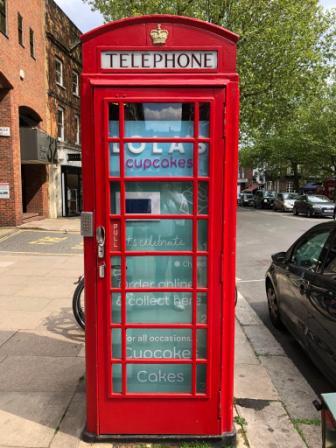
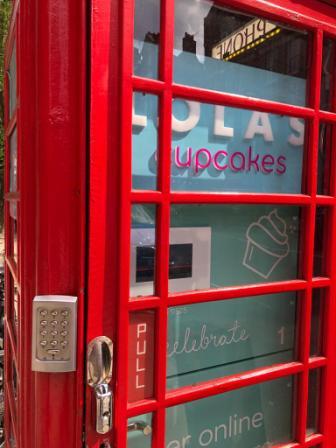
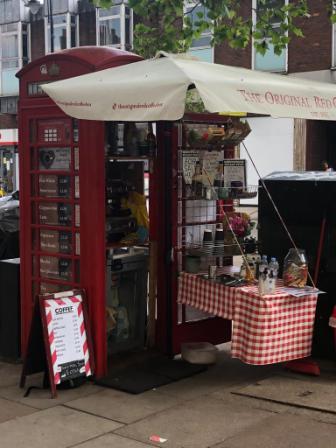
Thanks to Donna for the photos.
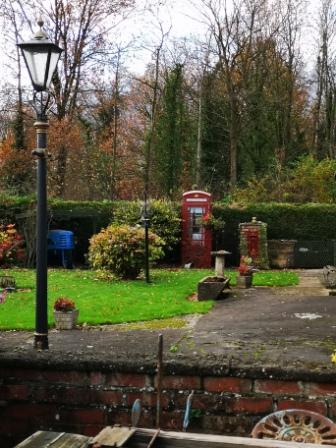
Here are some non-fictional places:
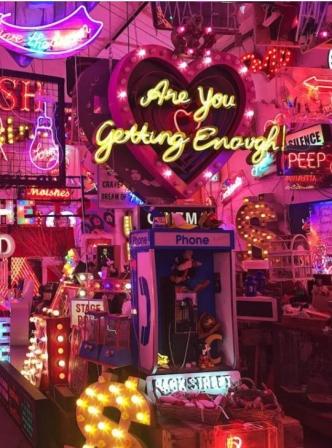
A friend sent me this image of ‘Gods Own Junkyard’ in Walthamstow, London. I’ve discovered ancestors who lived there in the late 1700s-mid 1800s. When things open again I’ll go visit.
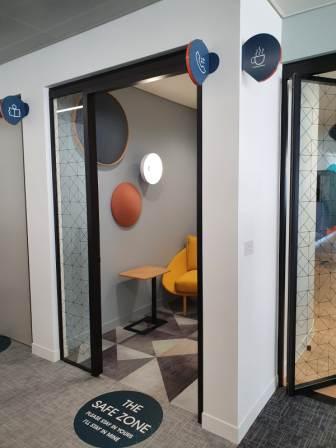
Part of my Lockdown viewing has included all the repeats of ‘Agatha Christie’s Marple‘ and other Christie versions.
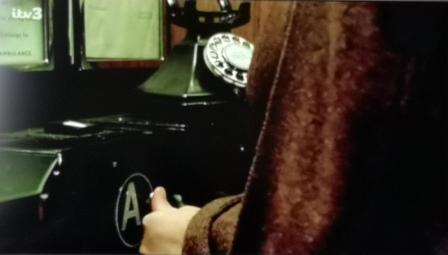
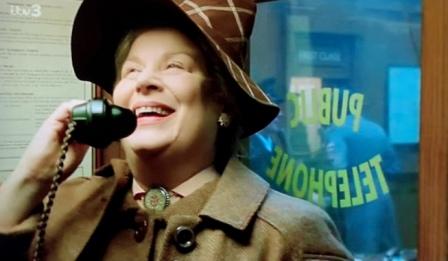
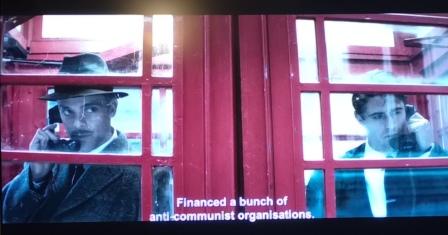
Then I moved onto Poirot and in the image below we have a murder IN the phone box:
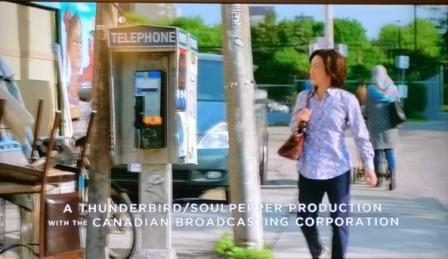
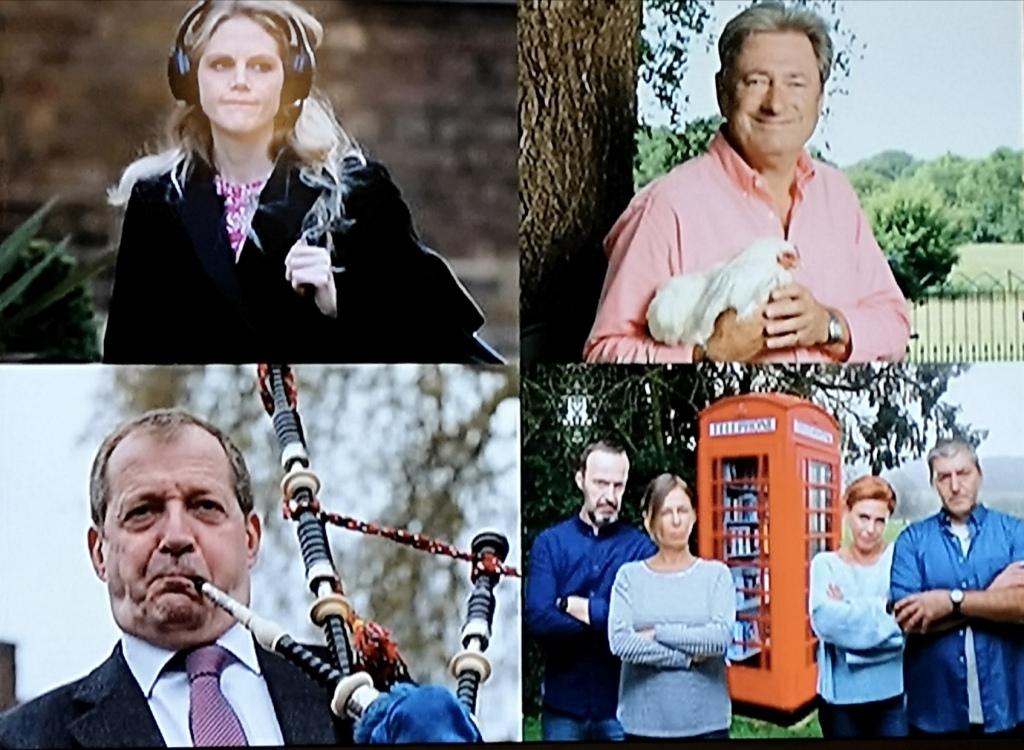
Then there’s all the other TV I’ve watched, including:

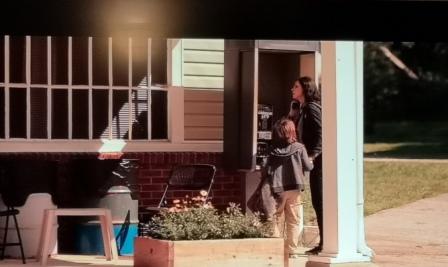
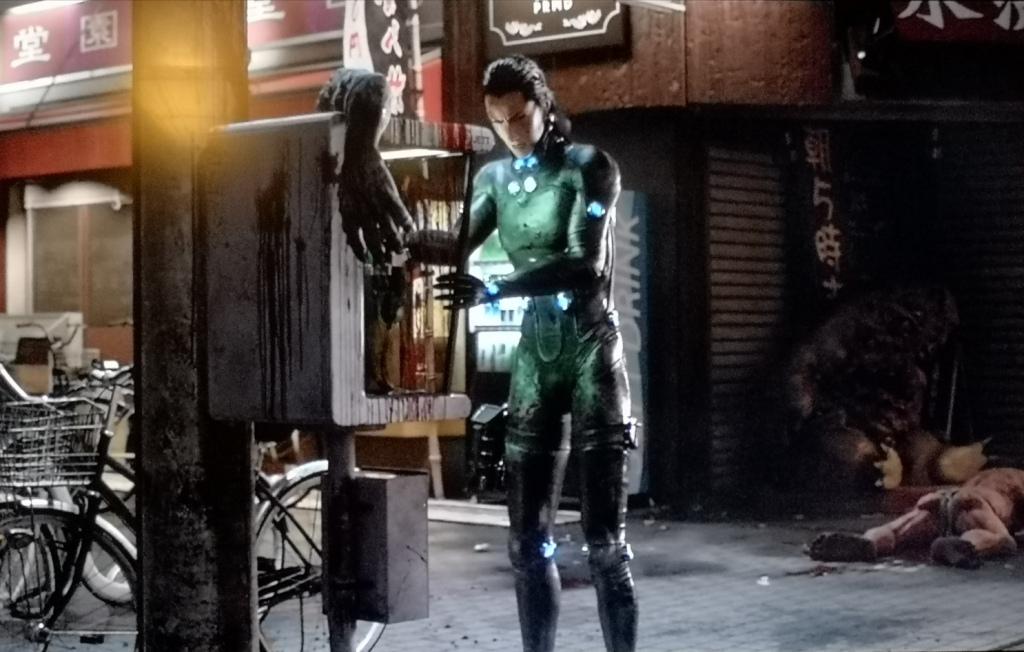
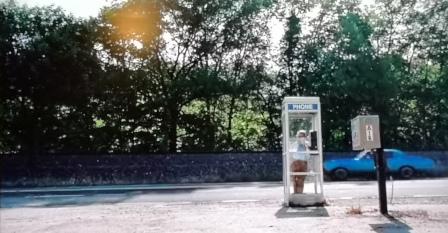
Posting these I realise how bleak my viewing has been, so here’s something a little brighter:
We just started watching ‘Your Honor‘ and this shot appears in the first 10 minutes or so. I love the way it’s constructed, with balance and form and colour.

Not sure how we missed this Christmas episode…
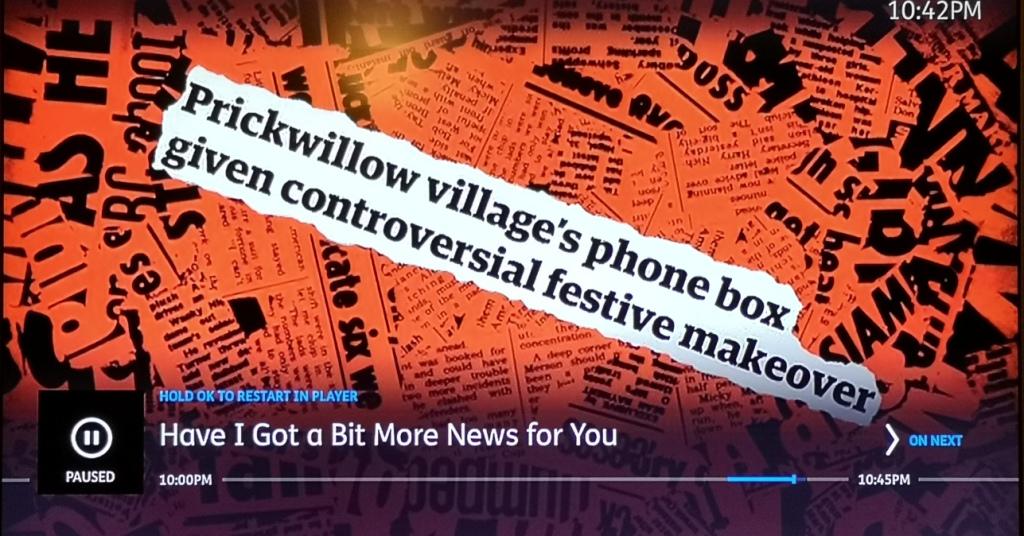
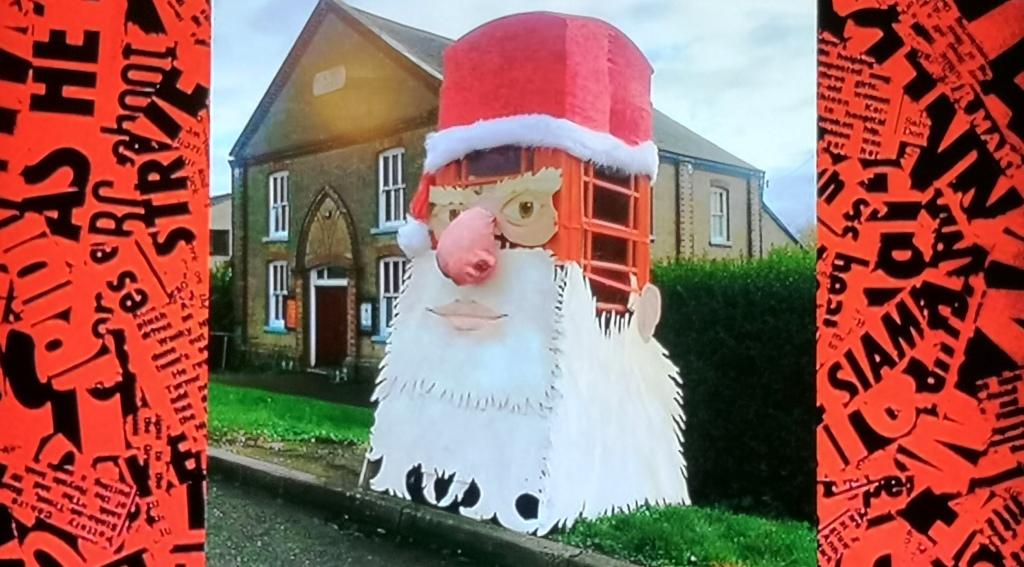
Not a new idea but nice to hear about how communities are keeping an icon relevant…
BT is putting 4,000 phone boxes up for adoption. Many have already been turned into libraries, defibrillator stations, even tiny art galleries.
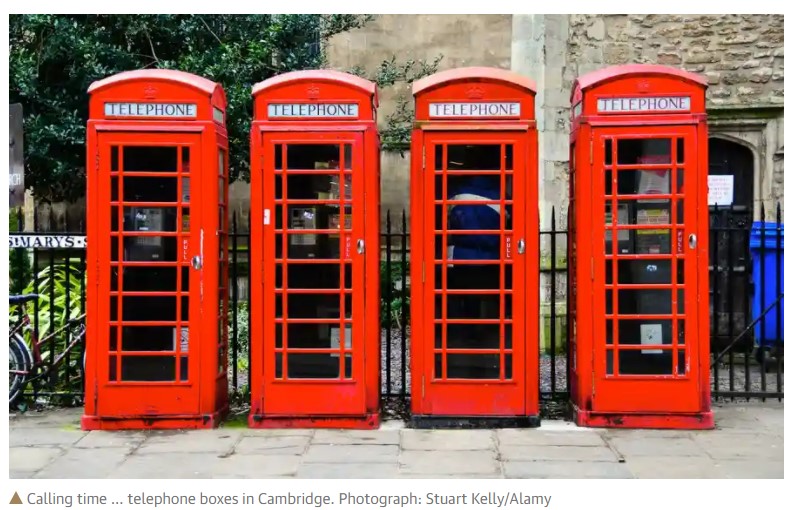
Name: Red telephone boxes.
Age: Sir Giles Gilbert Scott’s original K2 design dates from 1924, but his smaller K6, from 1936, is the the more widespread.
Appearance: Iconic.
Purpose: Depends.
You mean it depends on the nature of the telephone call you wish to place? Of course not – nobody uses phone boxes to make calls any more.
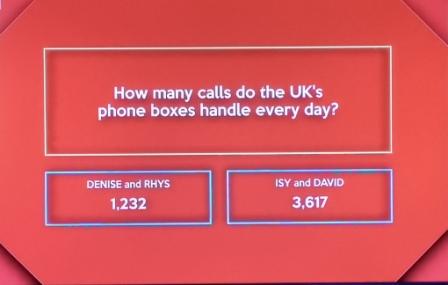
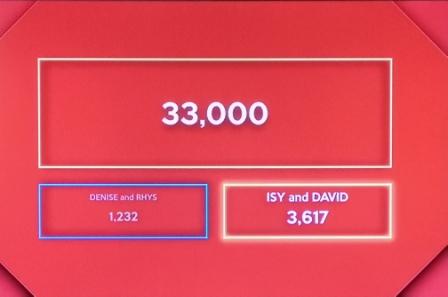
Why not? Because everybody has a mobile now. Only about 7,000 traditional red phone boxes across the UK even work, but more than half lose money and calls continue to decline by 20% a year.
What other purpose can an obsolete phone box serve? A lot of them get turned into libraries.
Aren’t they a bit small for that? They’re very small libraries – basically community hubs where books can be donated and exchanged.
I suppose it’s better than no library at all. Precisely. When mobile library funding was cut for Westbury-sub-Mendip, Somerset, the parish council bought the local phone box and slung up some shelves.
Bought it from where? From BT. Since 2008, its Adopt a Kiosk scheme has allowed communities to purchase its redundant phone boxes for £1.
Is the scheme popular? Yes. So far 6,600 phone boxes have been adopted, and BT just announced another 4,000 are to be made available.
That’s a lot of tiny libraries. They’re not all full of books. Some of the kiosks were turned into information centres or mini-museums. In Cheltenham, nine disused boxes have been transformed into single-occupancy art galleries.
What a lovely idea. If there’s a downside to cutting vital community services to the point where they can fit inside phone boxes, I can’t see it. Well, some of the library boxes have had to be temporarily shut because of Covid.
I suppose there may be a risk there. And someone has been leaving erotic fiction in the phone box in Hurstbourne Tarrant, Hampshire.
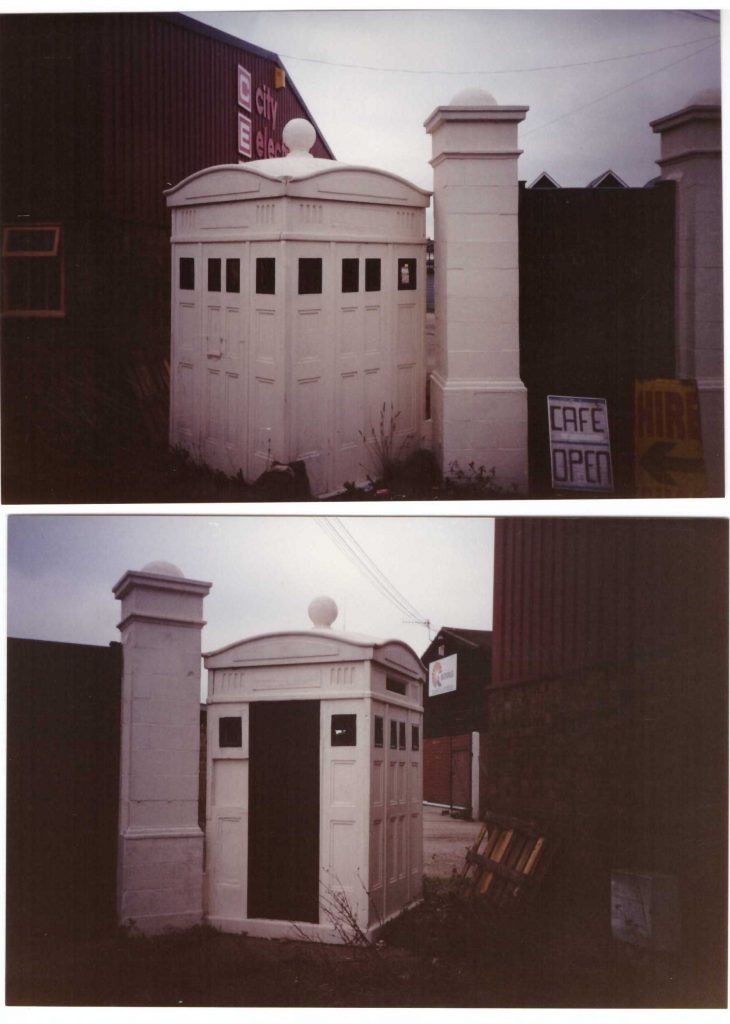
I came across this photo when going through some archaeological archives. It’s described as a Faversham gatehouse. It’s obviously on an industrial site and that appears to be ME13 7DL as the electrical supplier CEF is based there. Next time we go to Faversham, we’ll take a little detour.
In 2019 I posted a story about the Japanese wind phone – you know I love to bring to this blog, the weird and wonderful ways that phone boxes exist in our world. This beautiful idea appears to be catching on . Here is a story from the USA. (I would love to set this off where I live but I’m afraid the booth would just be vandalised.)
Marshall phone carves out space for spirituality and grief
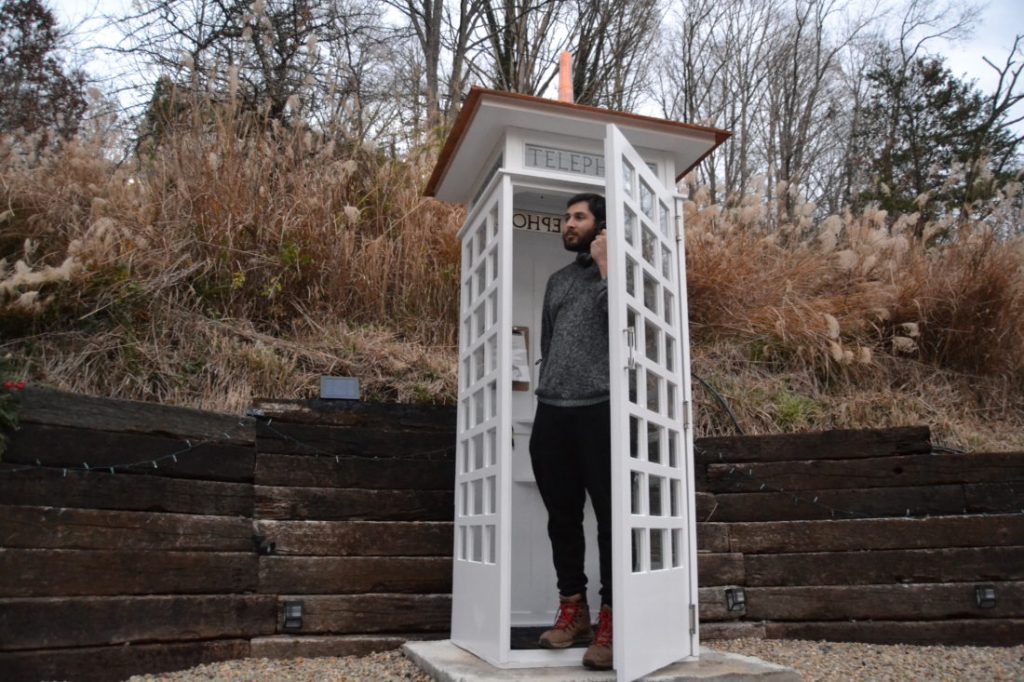
Just off state Highway 213 in Marshall, a 1940s rotary phone sits inside a white, glass-paned phone booth, overlooking a garden and, in the distance, a ridgeline. While not physically connected to any network, the phone facilitates spiritual connections. Here, visitors can pick up the handset, “call” their lost loved ones and release whatever words they wish to communicate into the wind.
As Western North Carolina continues to grapple with the coronavirus pandemic, the wind phone’s creator, Susan Vetrone, hopes the space will offer respite and a glimmer of hope to anyone struggling with the complex emotions that accompany loss.
“People are carrying around a lot of grief,” explains Vetrone, a Marshall resident who conceptualized the project this June and oversaw the booth’s installation in October. “It’s hard to lose people you love. … I hope this helps to relieve some of that angst.”
The concept for the Marshall wind phone, says Vetrone, is based on the original “phone of the wind” in Otsuchi, Japan, created by garden designer Itaru Sasaki in 2010. Sasaki initially built the phone to cope with his grief over his dead cousin. But after a tsunami and its aftermath killed 20,000 members of his community the following year, Sasaki opened the site to the public. In the subsequent three years, the booth became a community cornerstone, receiving over 10,000 visitors.
Vetrone first heard the story of the wind phone as she was mourning her mother’s battle (and eventual passing) with Parkinson’s and dementia. “It really moved me,” she recalls. “I immediately started seeking out a way to make it happen here. I wanted it to mirror — almost exactly if it could — the Japanese phone booth that brought so many people comfort.”
Replicating the style of the original wind phone wasn’t easy. Vetrone had to sift through many red, shiny “UK- style” booths before eventually tracking down a plain wooden one, which she then painted white. “We wanted the feeling of lightness and spirituality,” she explains.
And to evoke traditional Japanese architecture, Vetrone commissioned local sculptor Steve Reed to create the booth’s ornate copper roof. She also weatherized the structure and installed solar lights inside the booth so visitors could make calls after dark.
Neighbor Sherrye Perry, who has lost both of her parents and visits the wind phone often, appreciates that it gives her the space to “say what you need to say.”
“It reminds me that there are all different ways and resources and paths to communicate with — at least in my mind — my creator and my ancestors,” Perry adds. “That we are surrounded by a great cloud of witnesses. I can’t see them, but you can feel them. And they see me, and I feel uplifted by knowing that.”
The wind phone is open to the public at 386 Madison Heights in Marshall, about a 25-minute drive from downtown Asheville.
From Asheville, take Interstate 240 to Interstate 26 west. At Exit 19A, take U.S. Highway 25/70 north toward Marshall. Turn right on State Road 213. After 2 miles, turn left on Madison Heights Drive. The parking lot is on the right.
Source: https://mountainx.com/living/marshall-phone-carves-out-space-for-spirituality-and-grief/
This I did not expect…
(I had to grab screen shots before getting an intrusive pop up screen, so apologies for the presentation.)
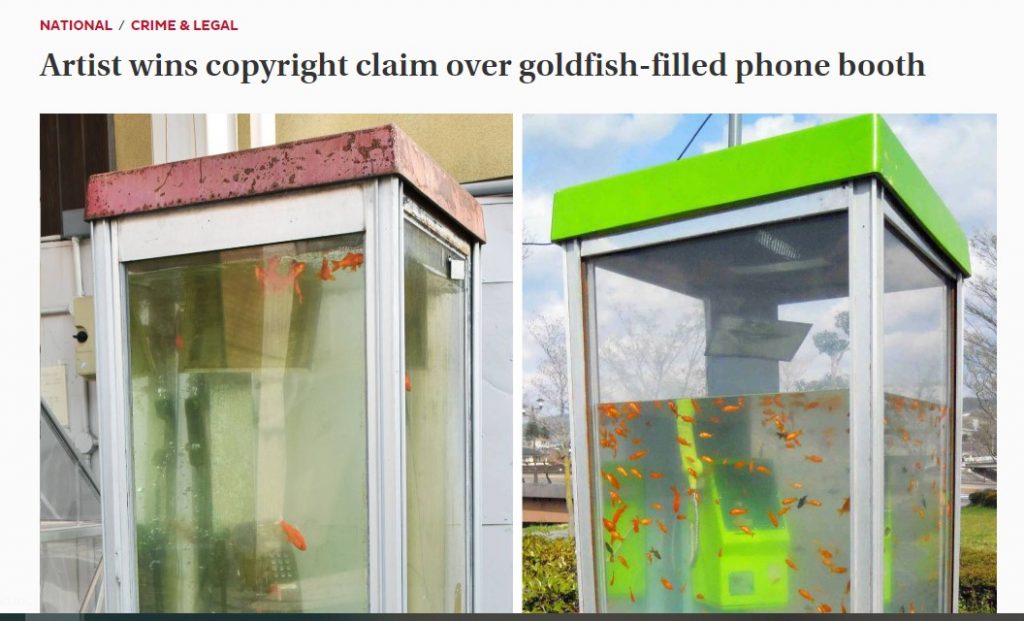
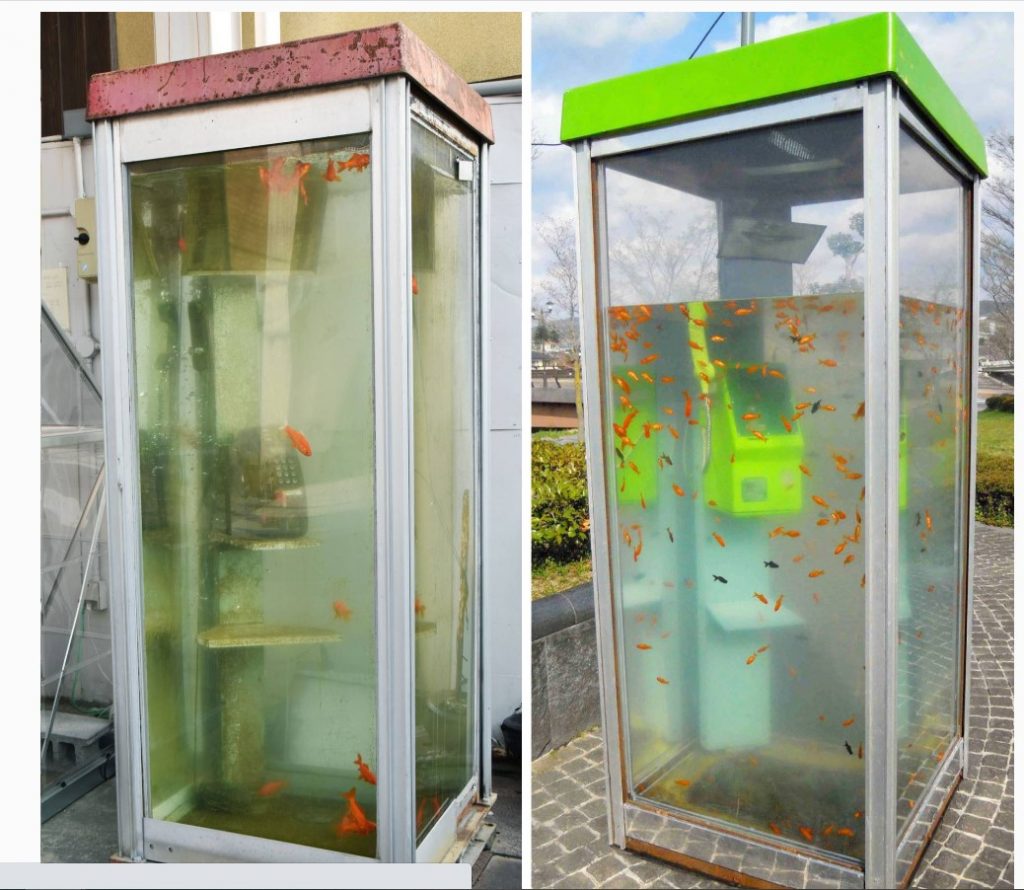
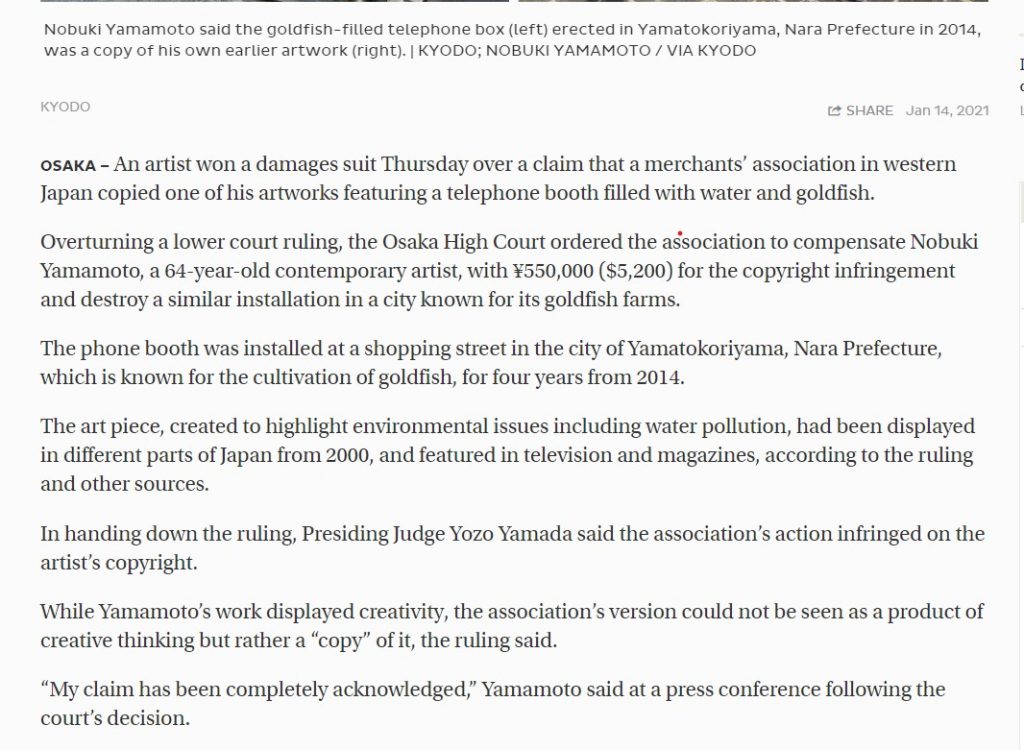
Online exhibition celebrates telephones in literature
I thought that my blog would become somewhat irrelevant over the years, as focusing on a piece of technology of the past would mainly be of interest to social historians. Yet our collected response to Covid-19 has proved me wrong. Communication is still a key feature of the make up of human beings. We all need to connect to someone. Yes, the technology has changed, but it’s still technology being put to the same use – to maintain contact.
A current online exhibition seems to prove my point. Click here for more:
https://www.theguardian.com/artanddesign/2020/nov/17/milkman-to-mark-twain-online-exhibition-celebrates-telephones-in-literature
“They can be objects of romance or harbingers of doom. They can provide plot twists, shocks, horror, comedy or character. Now the role of the telephone in literature, from the 19th century to the present day, is being celebrated in an online exhibition, Crossed Lines.
Readers of books, plays and poems were invited to send in their favourite references to telephones in literature, and almost 100 examples, from the earliest models to smartphones, were submitted from across the world…”
(from The Guardian)
Comments Off on Online exhibition celebrates telephones in literature
Posted in Comment, News
Tagged literature