

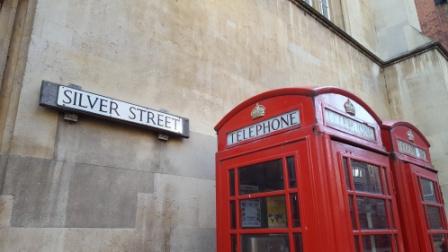

A new scheme from BT:
The Adopt a Kiosk scheme enables your community to retain its iconic red kiosk. It is open to the following bodies:
The Adopt a Kiosk scheme has been successful in transforming unused payphone kiosks and preserves the heritage of the red kiosk, particularly in rural locations. We allow red kiosks to be adopted, subject to certain criteria such as low use and those not required for our own future plans.
Kiosks are “adopted as seen” and we won’t make improvements to them ahead of adoption. We also won’t be able to move kiosks to another location. We occasionally allow modern kiosks to be adopted in rural areas if required for specific purposes (for example to house a defibrillator) where there are no red ones available. Should your request relate to a kiosk in an urban area, we will normally carry out an individual assessment to see if adoption is possible. Just let the Adopt a Kiosk team have details of the kiosk in question and they will be able to confirm availability.
We can’t allow private individuals (unless they own the land where the kiosk is on) to adopt kiosks but our supplier X2 Connect do sell them to interested parties. For further information please click here.
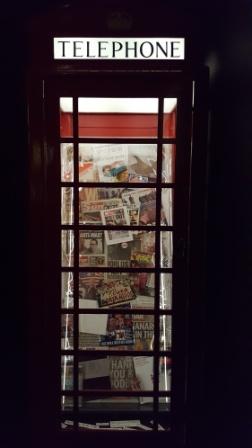
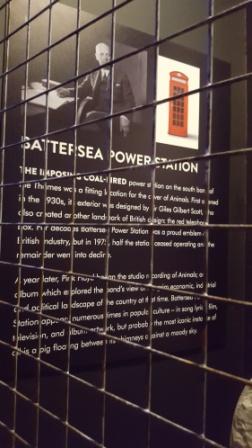
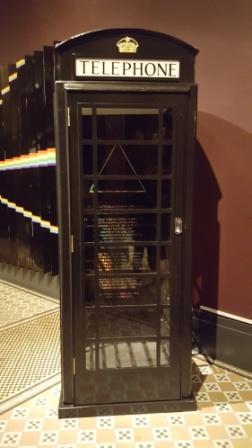
The recent Pink Floyd exhibition held at the V&A used the iconic British phone box through-out:


From BBCs Radio 4
The UK’s forgotten phone-boxes
Dan Damon has been investigating what happens when BT hangs up on some of Britain’s phone-boxes and hearing phone box memories from PM listeners.
One covers the question ‘what happens to a phone box when it dies’ and the other looks at the memories people have of UK phone boxes.
I woke to some sad news today – BT are phasing out UK phone boxes. Well it had to happen. I was in Poland recently and saw no phone boxes and wondered if this was going to happen elsewhere. BT makes the suggestion that phone boxes can be adopted – well for £1 I’ll do that. I’m going to email them now for the details. Update – private individuals are allowed to purchase them.
From the BBC, 15 August 2017.
BT is to scrap half of the UK’s remaining 40,000 telephone boxes and focus on the ones in locations where people are more likely to use them. In 1992 at their peak before mobile phones became popular, there were 92,000 phone boxes in the UK. Telephone boxes still handle 33,000 calls a day, but one third of kiosks are never used to make a call. BT said many phone boxes had become a burden and were expensive to repair and maintain.
“BT is committed to providing a public payphone service, but with usage declining by over 90% in the last decade, we continue to review and remove payphones which are no longer used,” a BT spokesperson told the BBC.
BT intends to scrap the 20,000 telephone boxes over the next five years. Out of the 40,000 phone booths still working, 7,000 are the traditional red phone boxes designed in 1935 to commemorate the silver jubilee of King George V.
More than half of phone boxes lose money and the number of calls is declining by more than 20% per year. The cost of maintaining telephone boxes annually is about £6m. BT is responsible for repairing damage to the kiosks, including replacing glass panes and broken receivers, as well as removing graffiti, rubbish and human waste.
For the full article go to the BBC – https://www.bbc.co.uk/news/business-40934210
Thanks to Shiraz for this link:
The famous phone boxes: a review of ‘Out of Order by David Mach, on TripAdvisor
“Out of Order is an art installation in Kingston upon Thames. It’s a series of 12 old fashioned red phonebox’s that are laid out as though they have fallen against each other.”


Comments Off on Television, Film & Theatre
Posted in Media
Tagged cinema, Germany, New Zealand, sci-fi, television, theatre, UK, urban, USA
I visited the Sir John Soane’s Museum in London recently and was reminded of why this blog exists in the first place:
From the Guide Book: ‘The Dining Room & Library: On the pier against the west wall is placed a model of the tomb built for Mrs Soane in the burial ground of St Giles in the Fields (now St Pancras Gardens) after her death in 1815. The tomb was the inspiration for the iconic red telephone box designed in the 1920s.’
This is a wonderful museum and I can’t believe I have lived in London for almost 20 years and never visited before!

New style UK public phones
I go to Finsbury Park, north London, regularly and noticed the phone box shown below had appeared since my last visit. A few weeks later, just a couple of metres along from this box, appeared a freaky installation which I assume is a communication device.
Comments Off on New style UK public phones
Posted in Comment, Geography
Tagged UK, urban