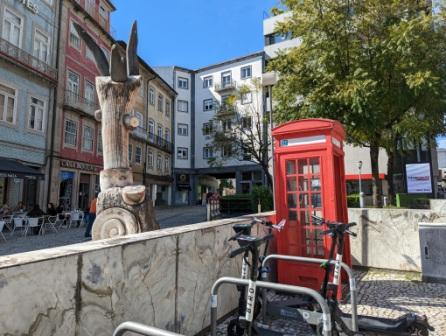
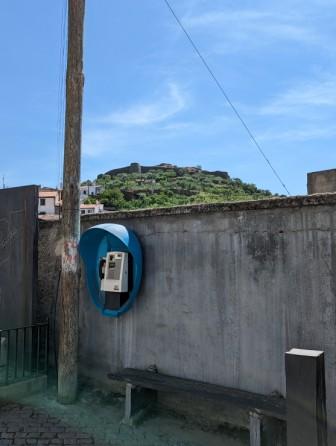
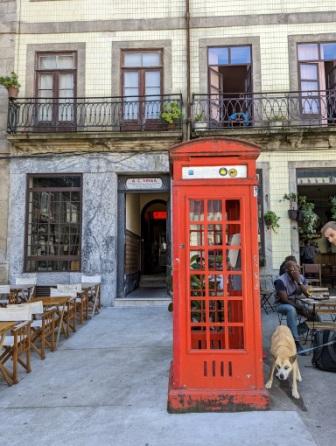
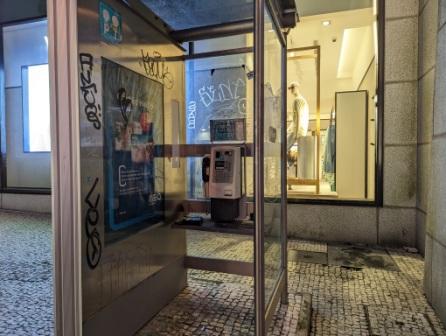
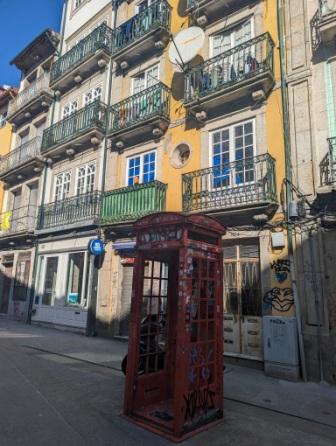
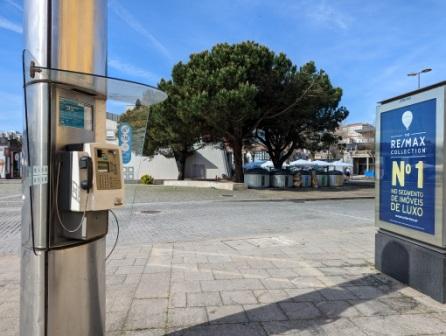
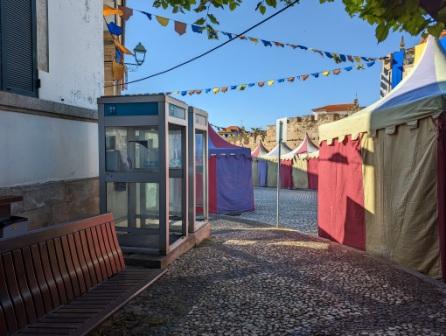
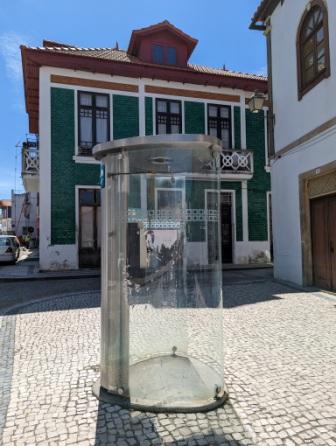
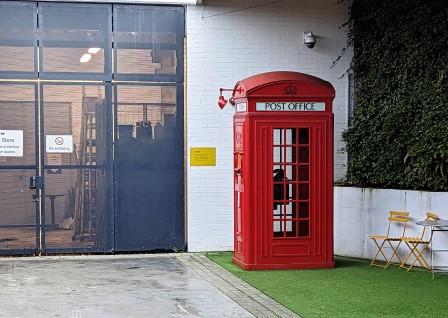
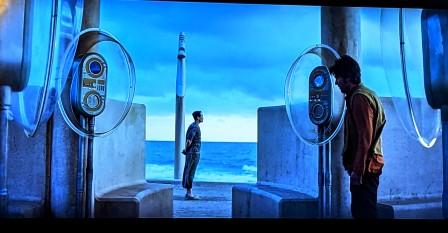
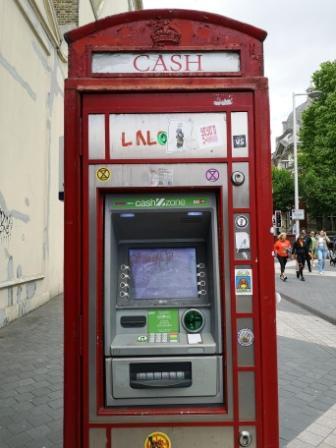
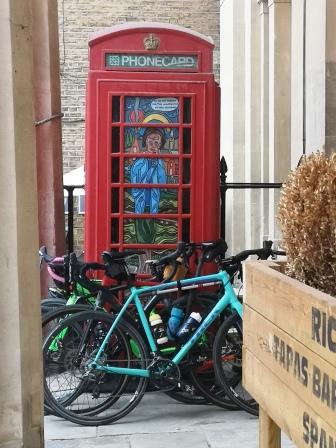
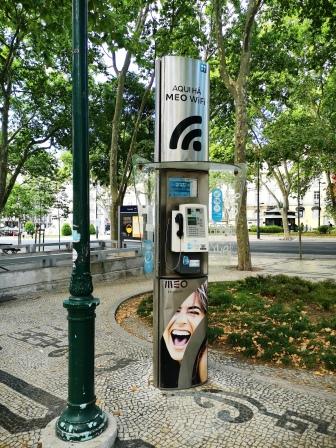
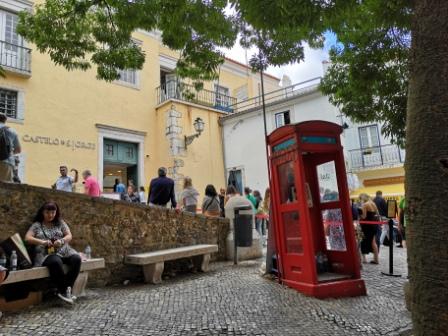
I had a long weekend in Lisbon a couple of months ago and came across enough phones to keep me happy.
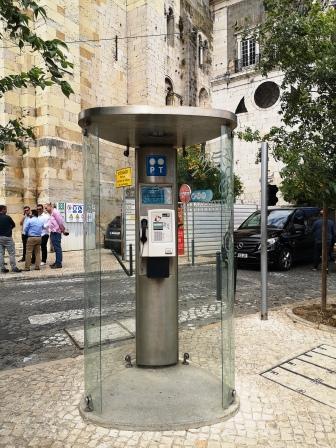
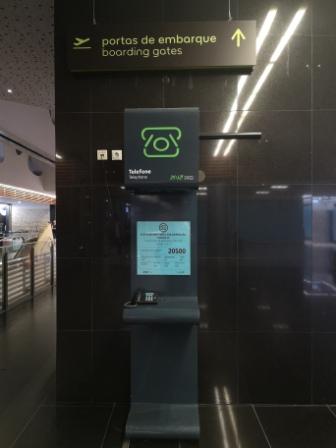
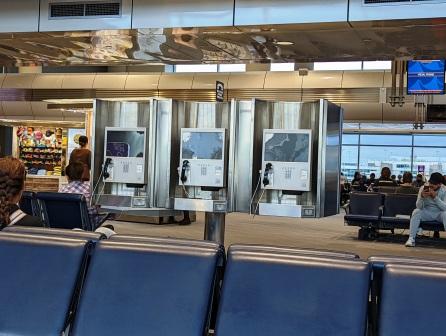
The airport phone didn’t quite match the technology offered at Denver though…
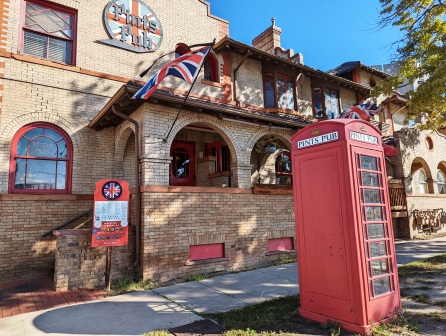
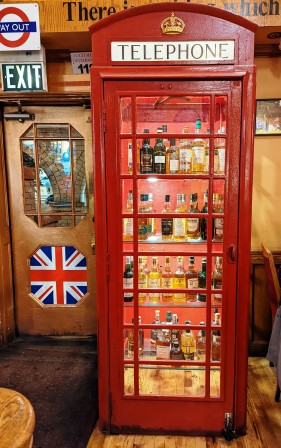
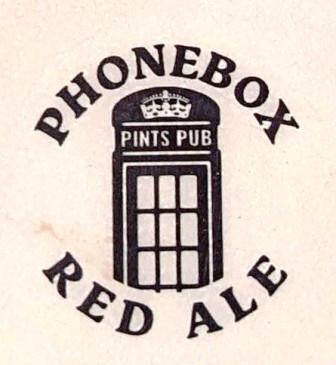
I recently went to Colorado, Utah and Wyoming for a couple of weeks holiday. I noticed that there are not a lot of phone boxes around. In Denver, the only one in the street I came across was an iconic British red box – outside a British pub of course. Inside was something even closer to my heat – a phone box full of whisky!
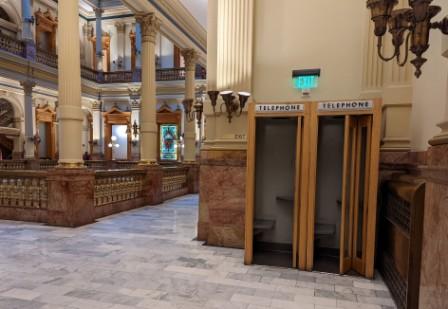
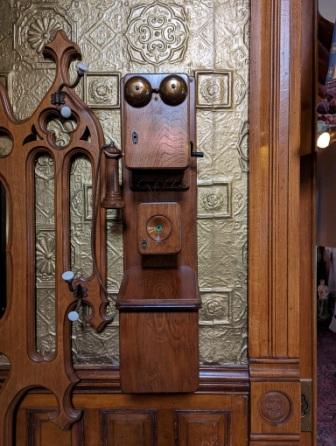
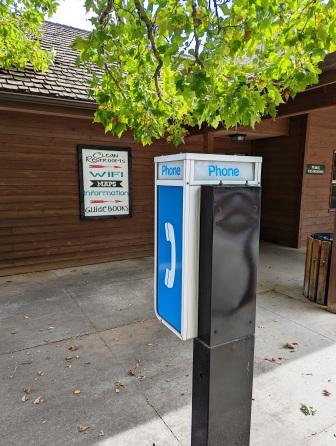
Molly Brown’s house had a phone, which in 1910 would have been rare, but it seems that was a replica. There were, unexpectedly, phone boxes inside the Denver Capitol building, although I don’t know if they still work. Apart from the airport, which appear to be next generation what with having screens attached, the only other phone we came across was ouside the Blanding visitor centre.
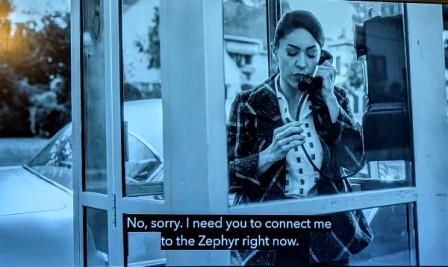
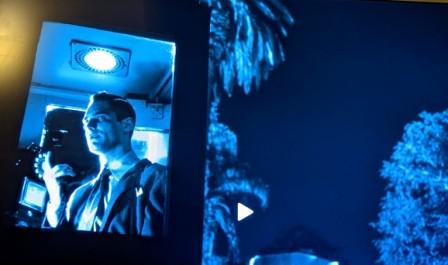
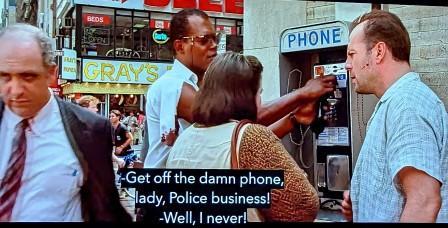
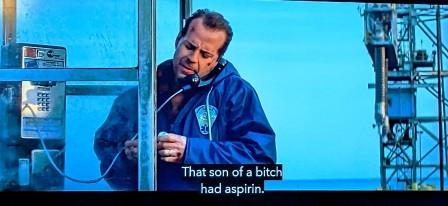
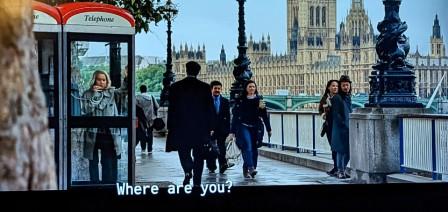
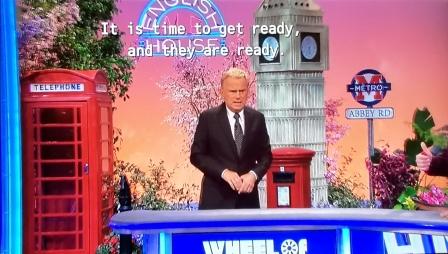
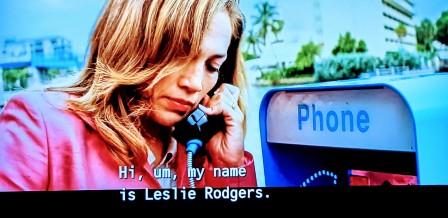
Yes more phone boxes on tv. This first one is America’s Game…The Wheel of Fortune. We’ve just started watching this and there was no explanation of the set. I’m not sure if it’s a regular thing but on this episode they appear to being trying to set an English scene. There is naturally a phone box but what’s this about the word ‘Metro’ being imposed on an Underground logo? A little reserach on the topic wouldn’t go amiss 🙂


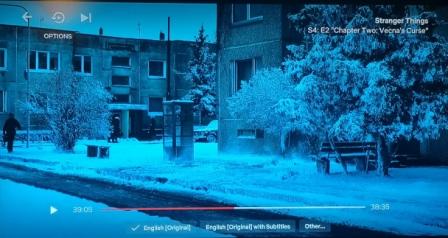





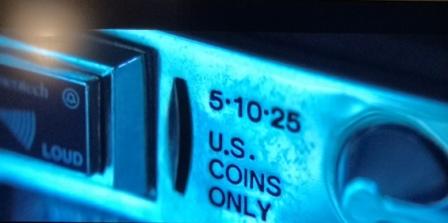

I have just read some saddening news. Not sad on the grand scale of what’s happening in the world at the moment but sad in that it brings to an end a long tradition in which I have an interesst. The following is cross-post from the CNBC website on 23rd May 2022:
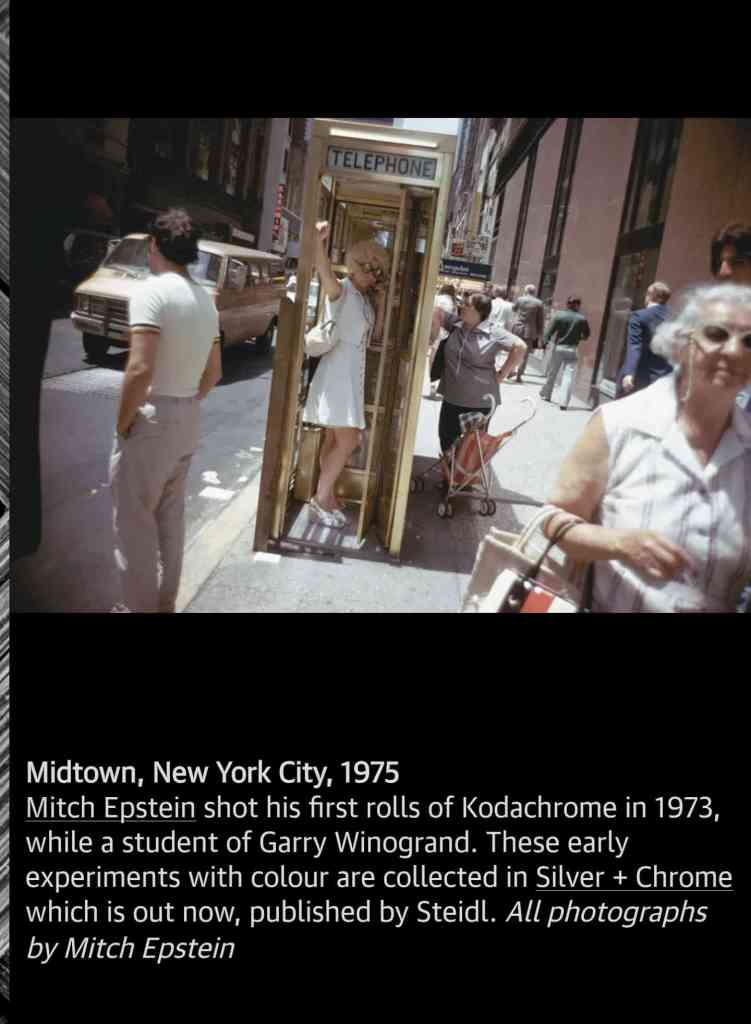
It’s the end of an era: New York City removed its last public payphone on Monday.
The boxy enclosures were once an iconic symbol across the city. But the rise of cellphones made the booths obsolete.
The effort to replace public pay telephones across the city kicked off in 2014 when the de Blasio administration solicited proposals to reimagine the offering, the city’s Office of Technology and Innovation said in a news release.
Officials selected CityBridge to develop and operate LinkNYC kiosks, which offer services such as free phone calls, Wi-Fi and device charging. The city began removing street payphones in 2015 to replace them with the LinkNYC kiosks.
There are nearly 2,000 kiosks across the city, according to a map from LinkNYC.
“Just like we transitioned from the horse and buggy to the automobile and from the automobile to the airplane, the digital evolution has progressed from payphones to high-speed Wi-Fi kiosks to meet the demands of our rapidly changing daily communications needs,” Commissioner Matthew Fraser said in the release.
The last public pay telephone will be displayed at the Museum of the City of New York as part of an exhibit looking back at life in the city before computers.
Responses
Responses to the article from the Guardian are reposted below – https://www.theguardian.com/culture/2022/may/01/the-uks-dwindling-red-phone-boxes-call-up-some-wonderful-memories
In response to Sophie Elmhirst’s long read, Steve Townsley and Mike Abbott recall their days with BT, and Tony Vinicombe, Mark Newbury and Peter Avery extol the virtues of Giles Gilbert Scott’s kiosks:
I greatly enjoyed Sophie Elmhirst’s article on the last of the UK’s phone boxes (The long read, 28 April). In the late 1980s, I worked for British Telecom in east London and when a new boss of “public call offices” (as phone boxes were officially called) was appointed, I was asked to take him on a tour of some of his new property. I took him to the site of one that I knew was frequently vandalised. All that remained were a few metal stubs poking out of the ground. It at least gave the new guy a feel for the scale of his job. From what I remember, he didn’t last long.
Steve Townsley
Bridgend
Your article was a joyous trip down memory lane. In the mid-1980s, I was the press officer for the international division of British Telecom. Due to a lack of interest from the corporate centre, I found myself managing the 30 or so BT district press officers dotted around the UK on matters of red phone boxes. As part of that, in tandem with my BT colleague Dave Wenlock, I toured schools, Dave suitably dressed in his “Mr Payphone” costume, imparting to young children the importance to the community of a working, reliable payphone network, key in those pre-mobile phone days. Wonderful memories.
Mike Abbott
Chiswick, London
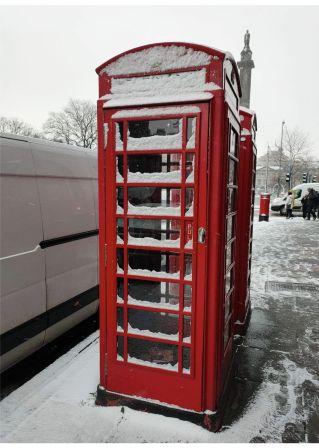
Towns that still possess a telephone kiosk designed by Giles Gilbert Scott might like to recognise its value by making it a listed building. Here in Shoreham-by-Sea, we have one that’s Grade II-listed. The 1920s Homes for Heroes Sea Mills estate in Bristol has one that contains its museum. These very British structures need to be retained, if only for their visual importance.
Tony Vinicombe
Shoreham, West Sussex
We still have a (working) red telephone box in Low Mill, Farndale. Given that you cannot get a mobile phone signal here, one of these days it will come in useful. In the meantime, its main role will remain acting as a focal point for every photographer passing through (red phone box, 19th-century stone bridge and a chapel – the epitome of the North York Moors).
Mark Newbury
Farndale, North Yorkshire
Save the Gilbert Scott cubicles, but remove all the disgusting 1990s BT boxes from our pavements: every time one is removed, a tree is planted in that hole. Simple.
Peter Avery
London
Comments Off on Responses
Posted in Comment, Geography
Tagged community, UK