From The Guardian, Sophie Elmhirst, 28 April 2022. I share Sophie’s passion about the phonebox.
Five million payphone calls are still made each year in the UK. Who is making them – and why?
There used to be a phone box at the top of my street. It stood in the middle of a traffic island, near a bin, a lamp-post and a bollard. I never questioned the presence of the phone box, just as I never questioned the presence of the bin, the lamp-post or the bollard. Often, when we passed, my daughter and I would play the phone-box game. I had to stand to one side and pretend to call the phone in the phone box, which didn’t work. She would then pretend to answer, before making a series of further calls in a complicated unfolding of phone-related business that involved making plans, changing plans and then ringing everyone she had just spoken to again to tell them she was going to be late.
It was fun, this game, and it became hard to pass the phone box without playing it. The phone box, to her, was the best kind of toy. It was a real object that no longer worked, and therefore had the gravitas of something adults had once used, but could now be deployed to her own imaginative ends. It also had an extra, loopy charm. A giant phone housed in its own little shelter outside in the middle of the street made absolutely no sense. A phone, to her, was a small, shiny rectangle that lived in my coat pocket. This outdoor cubicle with a handset on a cord and fat, squishy buttons was both hilarious and mysterious, as if it had landed from the sky.
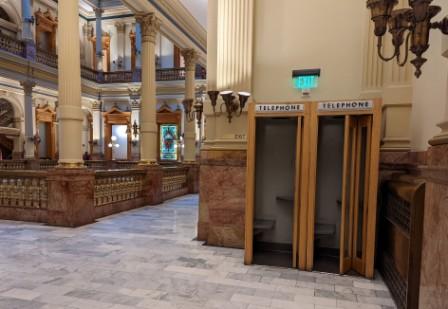
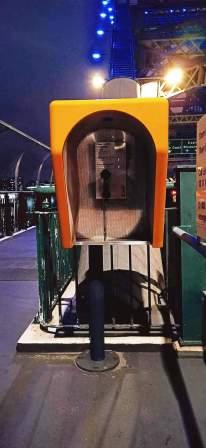
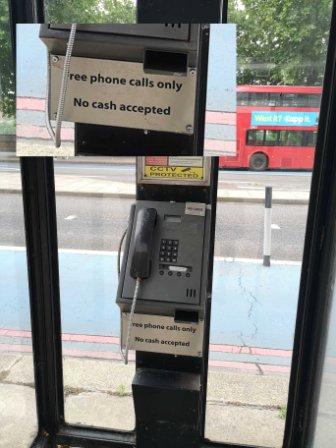
Walk round a city, a town, a village and you see them. The last phone boxes. Once you start seeing them, you see them everywhere. For a while, I became preoccupied by their contradictory presence, often standing proudly on a street corner, completely ignored. At their peak, in the mid-1990s, the British population of phone boxes was about 100,000. Now, there are just over 20,000 working boxes left, which still sounds like quite a lot, given it’s hard to imagine anyone actually using one. And yet, they do. According to Ofcom, 5m calls are still made from phone boxes annually. Five million! It seems impossible. A number so surprisingly large it made me think there must be a lone guy in a box somewhere obsessively making one-minute calls all day to random numbers.
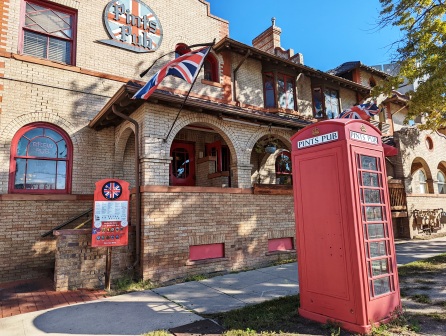
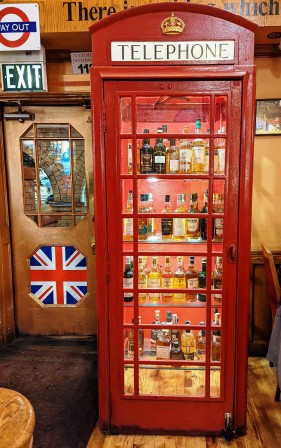
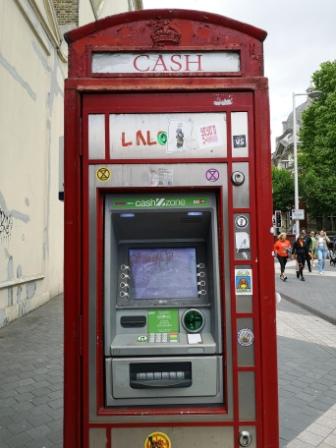
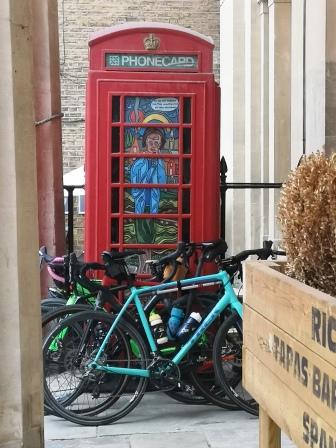
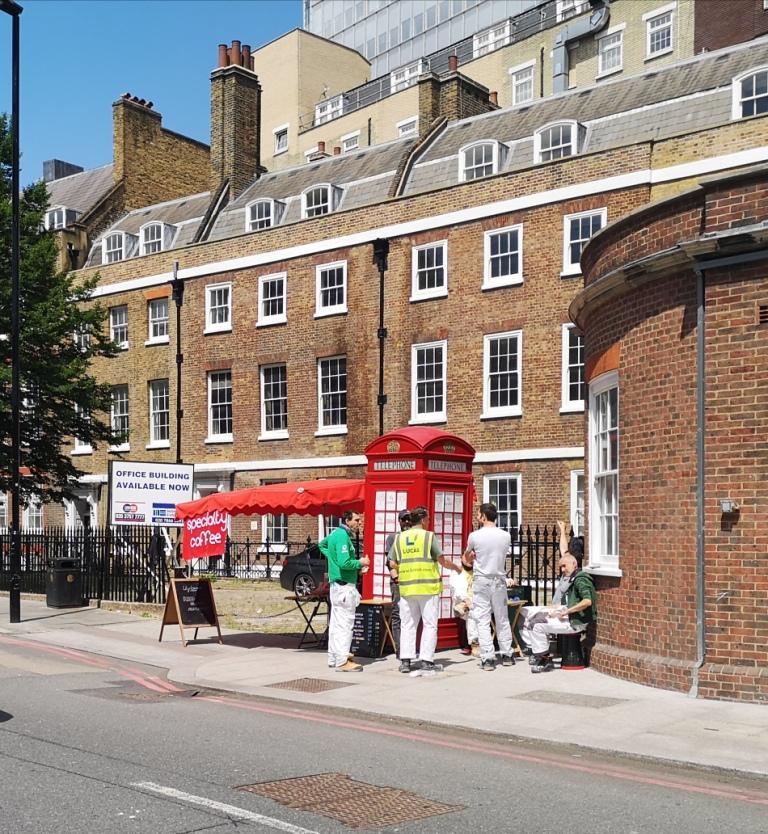
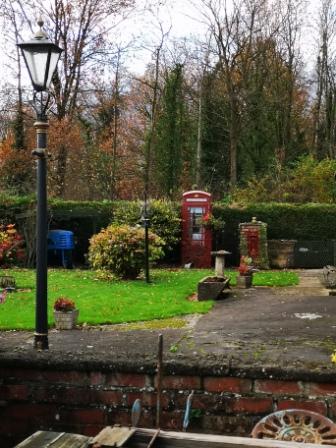
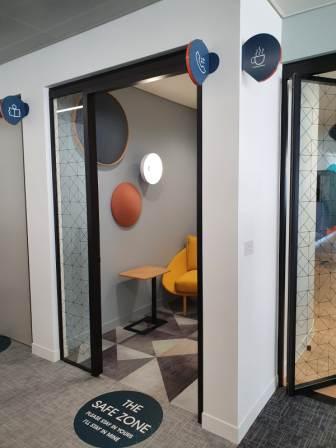
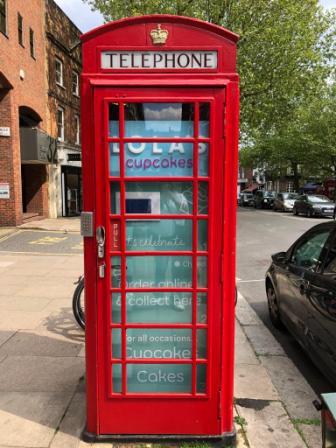
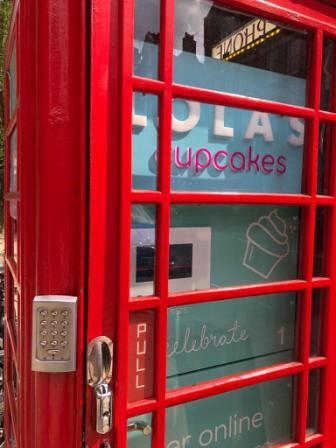
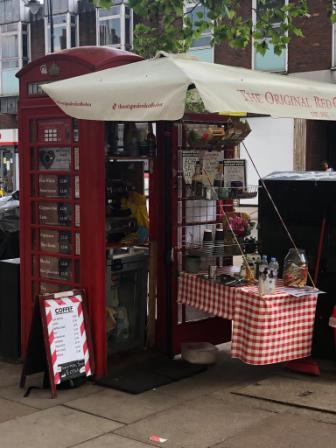
Many of the phone boxes you still see are shells of their former selves: not working, not yet gone. Just there, a remnant of a former time, often used as a bin. Some have been repurposed. Since 2008, when BT launched its adopt-a-kiosk scheme, more than 7,000 phone boxes, mostly the old red ones, have been bought by local communities for £1 each. Now, they house things such as mini libraries, art galleries and plant displays; many contain defibrillators, for ready access in a medical emergency.
Those that remain occupy a particular place in Britain’s idea of itself. On Oxford Street, I passed a tourist shop whose window display included a shelf of miniature red phone boxes sitting alongside its close relations: the doubledecker bus, the black taxi and an old-fashioned post box, all symbolic of a storybook, Enid Blyton-ish Britain. “If you were to do a painting of an English village,” said Nigel Linge, professor of telecommunications at Salford University and probably Britain’s premier phone-box expert, “you’d have a duck pond, a church, a pub and I’d bet you’d have a phone box.” (Linge’s first phone-box memory: calling relatives from the one on his estate in the mining village of Willington, County Durham; his family didn’t get a phone in the house until the 1980s.) “I don’t think any other country is as passionate about their phone boxes as we are about ours,” he added.
To understand this unlikely passion, I started going into every phone box I passed. Typically, there was broken glass, discarded cider cans, an unmistakable smell of piss. Not much to love. One old red box in Camden was a wreck – no door, plastic bottles and browned leaves carpeting the floor, a handwritten note in the glass advertising a hot blonde. I picked up the receiver and heard, unbelievably, the long tone of a line open for calls. An old, old sound. And then, a memory dump from a mid-1990s adolescence. Back then, out with friends, I used phone boxes quite a lot. They were near bus stops, outside tube stations. The odd reverse-charge call in a mishap, begging lifts or forgiveness.
For the full article go to The Guardian – https://www.theguardian.com/society/2022/apr/28/last-phone-boxes-bt-payphones-uk



Responses
Responses to the article from The Guardian that was referenced in the previous post, are reposted below.
In response to Sophie Elmhirst’s long read, Steve Townsley and Mike Abbott recall their days with BT, and Tony Vinicombe, Mark Newbury and Peter Avery extol the virtues of Giles Gilbert Scott’s kiosks:
I greatly enjoyed Sophie Elmhirst’s article on the last of the UK’s phone boxes (The long read, 28 April). In the late 1980s, I worked for British Telecom in east London and when a new boss of “public call offices” (as phone boxes were officially called) was appointed, I was asked to take him on a tour of some of his new property. I took him to the site of one that I knew was frequently vandalised. All that remained were a few metal stubs poking out of the ground. It at least gave the new guy a feel for the scale of his job. From what I remember, he didn’t last long.
Steve Townsley
Bridgend
Your article was a joyous trip down memory lane. In the mid-1980s, I was the press officer for the international division of British Telecom. Due to a lack of interest from the corporate centre, I found myself managing the 30 or so BT district press officers dotted around the UK on matters of red phone boxes. As part of that, in tandem with my BT colleague Dave Wenlock, I toured schools, Dave suitably dressed in his “Mr Payphone” costume, imparting to young children the importance to the community of a working, reliable payphone network, key in those pre-mobile phone days. Wonderful memories.
Mike Abbott
Chiswick, London
Towns that still possess a telephone kiosk designed by Giles Gilbert Scott might like to recognise its value by making it a listed building. Here in Shoreham-by-Sea, we have one that’s Grade II-listed. The 1920s Homes for Heroes Sea Mills estate in Bristol has one that contains its museum. These very British structures need to be retained, if only for their visual importance.
Tony Vinicombe
Shoreham, West Sussex
We still have a (working) red telephone box in Low Mill, Farndale. Given that you cannot get a mobile phone signal here, one of these days it will come in useful. In the meantime, its main role will remain acting as a focal point for every photographer passing through (red phone box, 19th-century stone bridge and a chapel – the epitome of the North York Moors).
Mark Newbury
Farndale, North Yorkshire
Save the Gilbert Scott cubicles, but remove all the disgusting 1990s BT boxes from our pavements: every time one is removed, a tree is planted in that hole. Simple.
Peter Avery
London
To read the article go to The Guardian – https://www.theguardian.com/culture/2022/may/01/the-uks-dwindling-red-phone-boxes-call-up-some-wonderful-memories
Comments Off on Responses
Posted in Comment, Geography
Tagged community, UK